Innovation through diversity?

Diversity – one of the most important topics at the moment. As society changes and diversity and inclusion become more important than ever, Companies must incorporate diversity as well.

At the moment, having a diverse workforce, is one of the most important qualities in order to be and stay successful in todays society.

How does diversity benefit a company? Is it simply for public image purposes or is it more valuable?
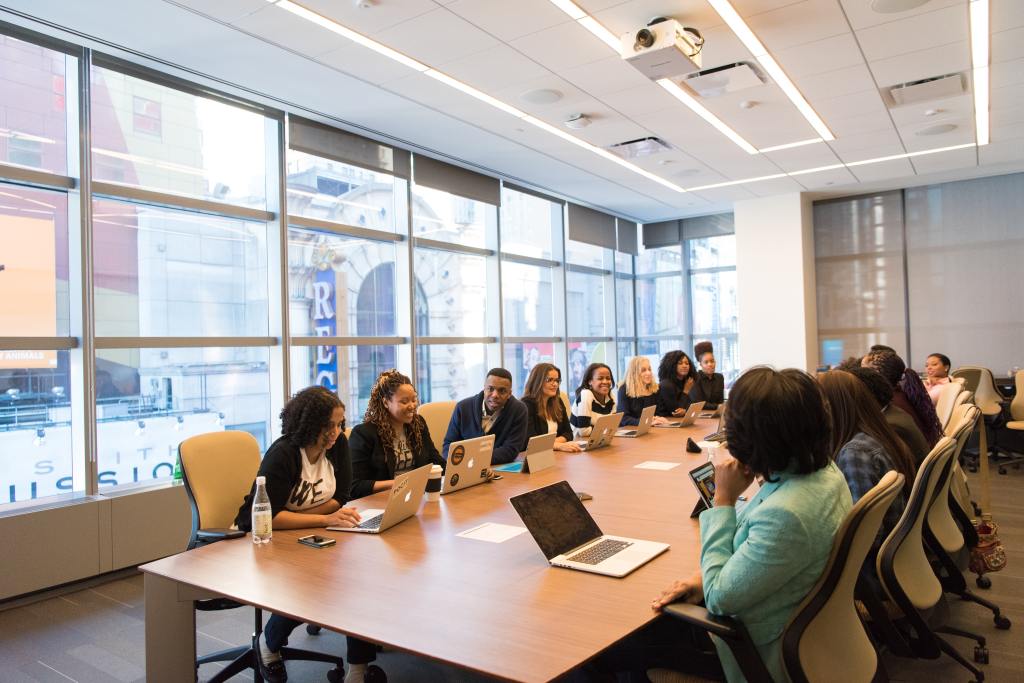
Innovation through diversity?

Benefits of diversity in the workplace

Public image is definitely one of the benefits of diversity. A diverse workforce will attract a bigger and more diverse consumer base, thus leading to more sales and profit for the company.

However, one of the more important benefits is innovation. Companies have to be able to keep up with the change of society and economy and diversity can harvest more creativity and greater innovation, since there are so many different cultures and ethnicities coming together. People with different experiences or heritages have different ways of thinking, different ideas and different approaches, which makes innovation and creativity easier

Another benefit could be that people are more motivated. Since there are new ideas ad perspectives, people might feel the urge to do better, to step outside their comfort zone, which leads to a more effective workforce.

How can we successfully achieve it?

There are many possible ways to achieve diversity in the workforce, such as measuring diversity, have role models and have certain mangers whos’ job is specifically to ensure diversity.

However, it is important to ensure a person isn’t hired for their ethnicity, but much rather their ability, which makes measuring diversity so difficult.

There is no correct way to establish diversity, but my suggestion would be to hire from all parts of the world and hire people based on abilities. Try to avoid unconscious bias and you will find achieving a diverse workforce isn’t actually as difficult as expected.

A new financial crisis?

Student loans are a highly discussed nowadays. Some people think they are extremely beneficial, while others suggest they could cause a second financial crisis.

So the question is who is right? Are student loans a good solution to high tuition fees or will they cause another recession?

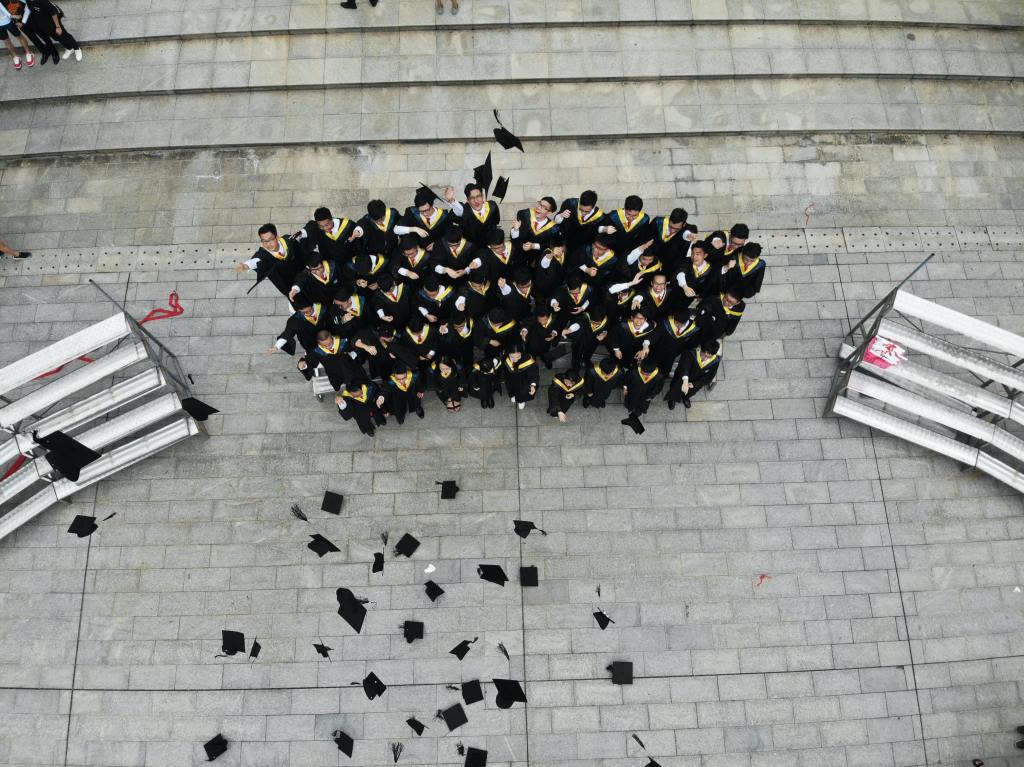
Graduation – the reason for a financial crisis?

Advantages of Student Loans

Nowadays a University degree is almost seen as a necessity to find the job you want or have a successful career.

Student loans allow everyone to have a higher education. Many students can`t afford these high tuition fees, student loans make the dream of going to a university possible.

Disadvantages of Student loans

Majority of students don’t think about the consequences when applying for student loans. This leads them into a higher debt then they thought. Some of which won’t have considered the interest rate on top of the debts and the penalties for not paying the debts such as added fees.

The student loans turn into a huge burden, especially when students struggle to find a well-paid job after they graduate. This burden can affect their credit scores, which can make it difficult to get loans or buy houses in the future.

This situation can be compared to the mortgage crisis in 2008, students don’t know what they are getting themselves into (or are forced to do so, because they can’t afford higher education otherwise) and banks give the loans to anyone who wants them.

In the US some experts say that the student loan defaults can impact the US economy and possibly trigger another recession.

Conclusion

As the disadvantages clearly outweigh the advantages not only for the students but also for the economy, I believe we have to find a new solution to high tuition fees or perhaps a different way of paying off the debts to ensure students are able to pay the back – for example no interest rates on student loans.

Brexit – what does it mean?

BREXIT has been a huge topic throughout the last few years and it is finally happening!!

However, talking about it for the last few Years has not cleared up many questions about what it actually means?

How will Brexit affect us people, global businesses and the economy? Is this actually a good thing or is this going to be the downfall for us?

Are these people right? Have we been lead to believe Brexit was the right thing to do, when really its just a lie?

Brexit for the people

The first thing that comes to our mind when thinking about Brexit is: How will this affect our travel?

Brexit could cause some problems when travelling to other EU countries. The question is how far will these problems go? Will we need a visa to travel to the EU? The truth is that it would probably only affect or travel slightly – meaning limited time in EU country, without a visa or the need to provide return flight details.

Many British citizen are currently living and working in a EU country and they possibly have been for several of years. Will this mean those people have to give up their British citizenship in order to stay in that country? – Or will they simply need a visa to be able to stay?

Brexit for global businesses and the economy

Brexit could have many serious impacts on global businesses thus also affecting the economy such as:

The import and export of goods could be more expensive and more difficult. The UK would now be unable to benefit from the free trade area of the EU, which means transport and taxes will make trading more expensive.

Brexit has also been proven to reduce investment and employment growth in global businesses. This can in fact lead to problem economically.

It could also cause a lower UK productivity growth in the future, since many companies in the UK economy import, export and employ from the EU. These companies tend to be more productive on average. However, Brexit might reduce the output of those companies, this would lead to a lower productivity growth.

Conclusion

Fact is that nobody knows how this will affect us. Brexit is an ongoing discussion and only time will tell if this ends up being the right decision.

Companies vs. COVID-19

CORONAVIRUS – a word everyone is afraid of right now. This new virus has the whole world in chaos.

Majority of countries are in Quarantine – others in complete lockdown with absolute nobody leaving their homes unless absolutely necessary

An important question to ask is how dangerous is this virus really, not only for us people but also  for small or big companies?

The virus’ impact on small businesses

For small businesses, this virus could be catastrophic. It could force many small businesses to shut down.

Customers are staying at home and order things online rather than buying them at their local stores, which ultimately results in less profit for small businesses.

Many small businesses such as restaurants are forced to close by the government, which means employers cannot pay the employees. This can ultimately lead to either employees losing their jobs or companies going into huge debts, when trying to pay the wages.

So, the question is how will the government deal with this? – will it support the businesses with paying wages in order to prevent the unemployment rate to grow unimaginably high?

The virus’ impact on large (global) companies

It is a known fact that global companies mostly produce their goods – or part of their goods – in Asia, especially in china. Since the virus first spread in China and forced most cities to be quarantined, many factories had to shut down.

This results in global companies struggling to meet the customers demand, as they are not able to produce the amount needed.

Apple, for instance, have admitted to be unable to supply customers with some products, such as iPhones.

Conclusion

The extent of the damage made to companies through the virus is still to be assessed, because the virus is so new. However, it can be said that this will affect many different companies, no matter how big or small.

The question is how will the government handle this, to minimize damage to us people and companies?

2007 – who stole my money?

2007 – a year which led to too much suffering. The much-asked question though is, who is to blame for this massive financial crisis?

Consumers blame bankers, while bankers blame consumers and regulators blame the government … Who is right in this chaos?

Consumers to blame?

Some might argue that the consumers should have looked into what they are getting. They shouldn’t have trusted the banks blindly, but instead have done some research.

However, can you really blame someone, who decided to trust professionals rather than the internet or their own judgement? If you think about it you would also ask your doctor before making a diagnosis – you trust a professional’s opinion over your own. Why would it be any different with your mortgage?

Bankers to blame?

Most people, especially consumers, blame the banks. They were being arrogant and greedy. They tried to make the most profits as fast as they could.

How were they able to get this far? The government promised them they would have their backs if the market were to crash – so is it really the banks fault? Sure, they were greedy but they wouldn’t have been able to go this far if the government didn’t support them with a safety net.

Government to blame?

The government provided the banks with this safety net, so surly it’s their fault, right?

Well they don’t think it is. The government argues that they had regulators overseeing the banks actions. It was the regulators responsibility to ensure the banks don’t become too greedy and need the safety net.

Regulators to blame?

They should have kept a close eye on the banks, why didn’t they do anything? They are the last group so surely its their fault isn’t it?

The truth is its not necessarily their fault either. They argue that the government failed to give the regulators enough power to actually interfere with the banks actions and stop them when need be. They were only assigned to overseeing the actions

Conclusion

Honestly, everyone contributed their own mistakes to the major crash in 2007. There is not just a single group responsible for this chaos – it’s a mixture out of everyone’s mistakes.

Rather than asking who is to blame, we should ask how to prevent it in the future – that’s what really matters, we don’t want history repeating itself.

Are you guilty?

Is it Racism or discrimination? Is it behavior or looks? Bozoma Saint John raises many questions with her statement – ‘Every time I board [business class], it’s like, “Oh, are you sitting in the right seat?” I make sure to keep my boarding pass out just in case somebody has a question’.

Knowing stereotypes and prejudices, leading to these assumptions and questions, exist in the 21st century is simply shocking. Why do we allow them to persist and can we prevent or destroy them?

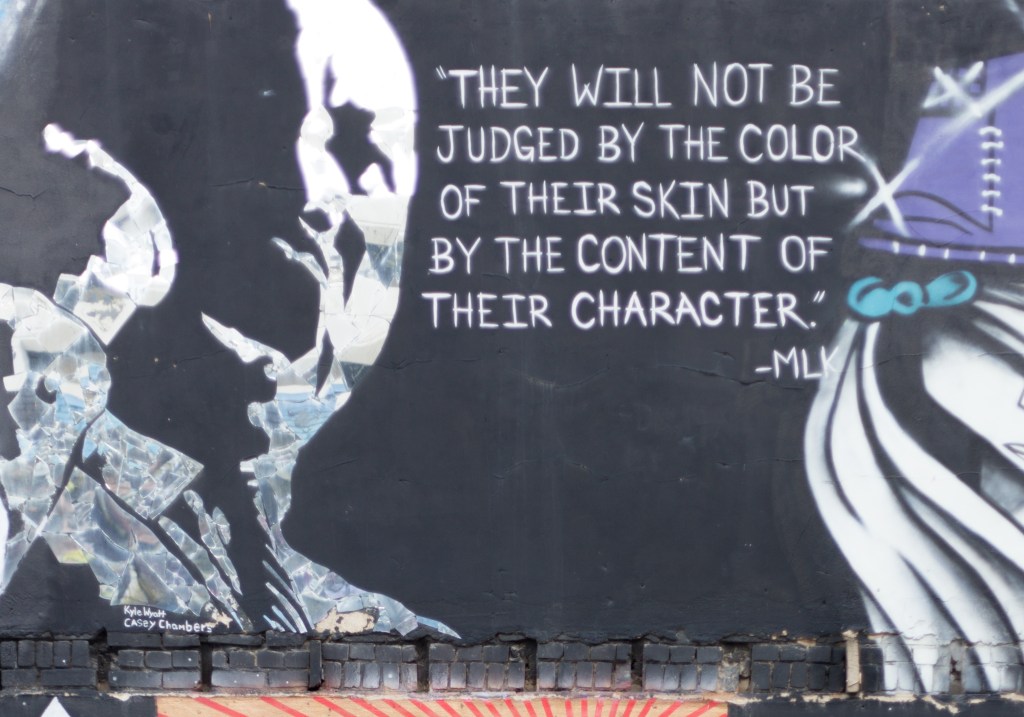
Can we achieve what Martin Luther King once fought for?

Why do we allow them to persist?

When I hear stories, such as Bozomas` I start to question myself. I ask myself if I have ever judged someone because of some kind of stereotype. Even though I know I would never treat a person differently because of ethnicity or looks – have I ever unknowingly judged a person?The fact is that unconscious bias is everywhere and mostly invisible in today’s society – especially to those who inflict it. These acts are mostly unintentional, but happen so frequently, that it can make people – such as Bozoma Saint John travelling business class – uncomfortable.

Since these biases appear to be occurring unknowingly, it raises the question if stereotypes and prejudices could ever cease to exist.

Can we prevent or destroy these unconscious biases?

We have been living in a society with visible and invisible discrimination for years and this will not change overnight – but we have to start somewhere.

Start by questioning yourself, questioning your acts and thoughts. Try to identify the bias and be open to change it. Don’t deny a possible unconscious bias – identifying it can be the first step towards destroying them.

We need to identify the issue in order to undo the bias and build an inclusive society, in which stereotypes and prejudices no longer exist.

Design a site like this with WordPress.com
Get started